Is Monterrey Safe? An Honest Guide for Travelers
This piece aims to be useful rather than reassuring. Safety in Mexico is a subject surrounded by equal parts alarmism and denial, and neither helps you plan a trip.
The basics: Monterrey is Mexico's third-largest metro area and receives a constant flow of visitors for work, sports, events and medical care. The vast majority of stays pass without incident. It is also a large city in a country where the security picture varies a great deal by region, which deserves informed decisions rather than either panic or dismissal.
Before anything else: check your own government's official travel advisory for the state of Nuevo León before booking. It is the only source that is kept current and stands behind its information. Nothing here replaces it.
How the city actually works
Monterrey is lived zone by zone. It is not a city you walk end to end — locals don't either. It is a cluster of municipalities connected by large avenues, where you move by car or app and walk within each area.
That has a direct consequence for visitors: risk rarely sits in "the neighborhood" — it sits in improvised movement. Getting out somewhere you don't know, walking around looking for a place you can't locate, or accepting an unarranged ride are the situations worth avoiding.
Central and visitor areas — the Macroplaza, Barrio Antiguo, Paseo Santa Lucía, Parque Fundidora — are busy, well populated and where visitor activity concentrates. Walking there during the day is entirely normal; on the busy stretches, so is walking at night.
Residential and commercial areas across the metro municipalities behave like any large suburb: everyone drives, there are few pedestrians, and streets empty out at night. That doesn't mean danger; it means aimless walking there serves no purpose.
Areas you don't know and have no reason to visit. As in any metropolis, some districts are not part of any travel itinerary. The rule is simple: if there is no concrete reason to go, you don't.
The habits that solve almost everything
Use ride-hailing apps, not street taxis. The trip is logged, the fare is set in advance, and there is nothing to negotiate. This is by far the single most important habit.
Check the plate and car model before getting in. Thirty seconds.
At the airport, use authorized transport or your app from the designated pickup point. Never someone offering a ride in the arrivals hall.
Don't display valuables. Phone away while walking, discreet watch and jewelry, bag in front in crowded places.
Carry limited cash. Use ATMs inside malls, banks or the airport rather than on the street.
Avoid driving intercity highways at night. This is standard advice throughout Mexico, not specific to Monterrey. Schedule long drives for daylight.
Share your location with someone. Especially if you're traveling alone.
Ask where you're staying. People who live in the area know which avenue to take and which not to, and that local knowledge beats any guide.
About alcohol and nights out
Most incidents that do happen to visitors in any large city worldwide concentrate in the same scenario: late at night, alcohol involved, moving through an unfamiliar area. Monterrey is no exception.
If you're going out: eat first, book the ride home from inside the venue, and don't accept improvised transport from anyone.
Emergencies
The emergency number in Mexico is 911, and it works nationwide. If you're a foreign visitor, also save the contact details for your country's consulate in Monterrey — several countries maintain representation in the city — and keep a digital copy of your passport.
What this means for choosing a place to stay
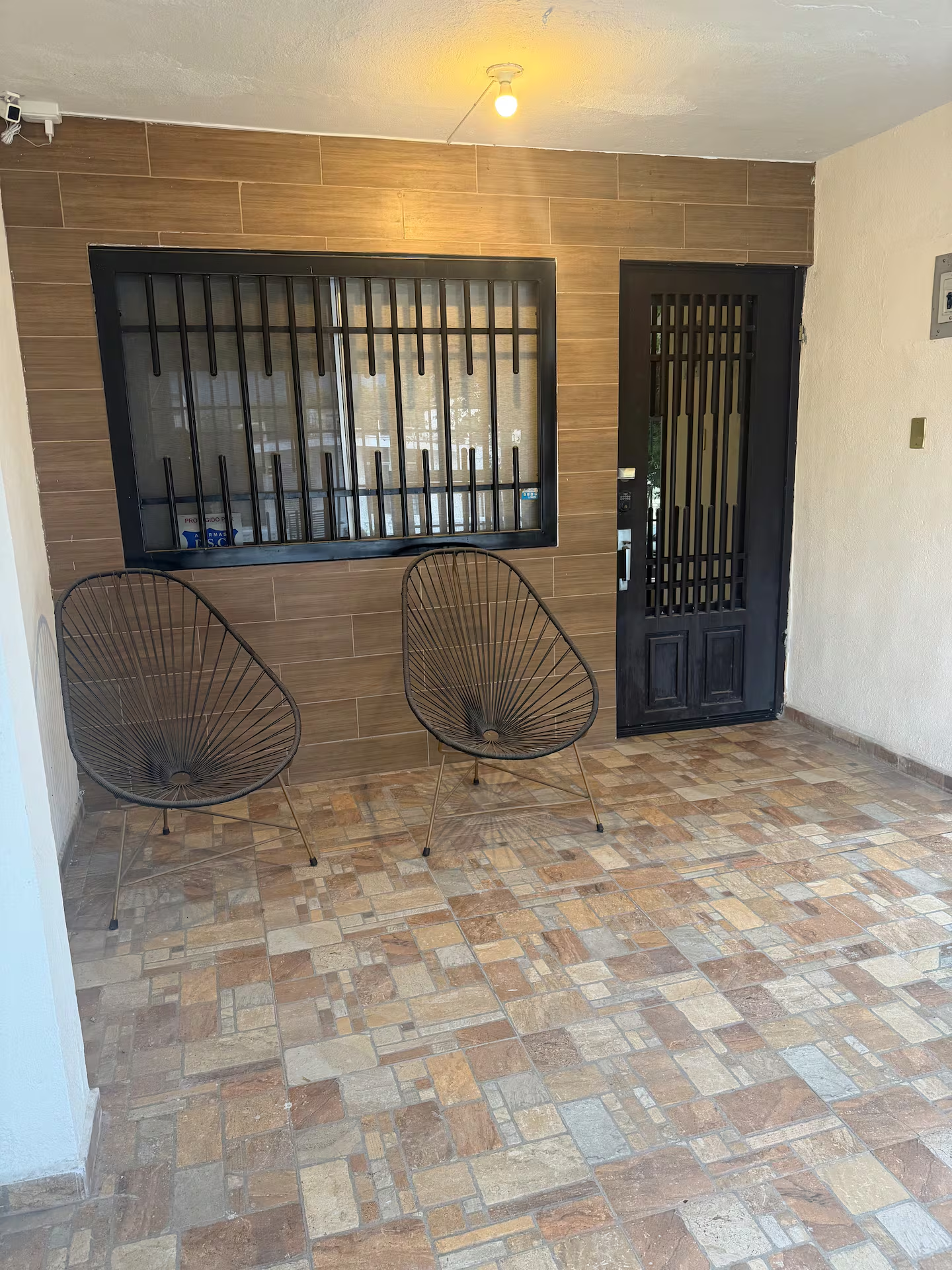
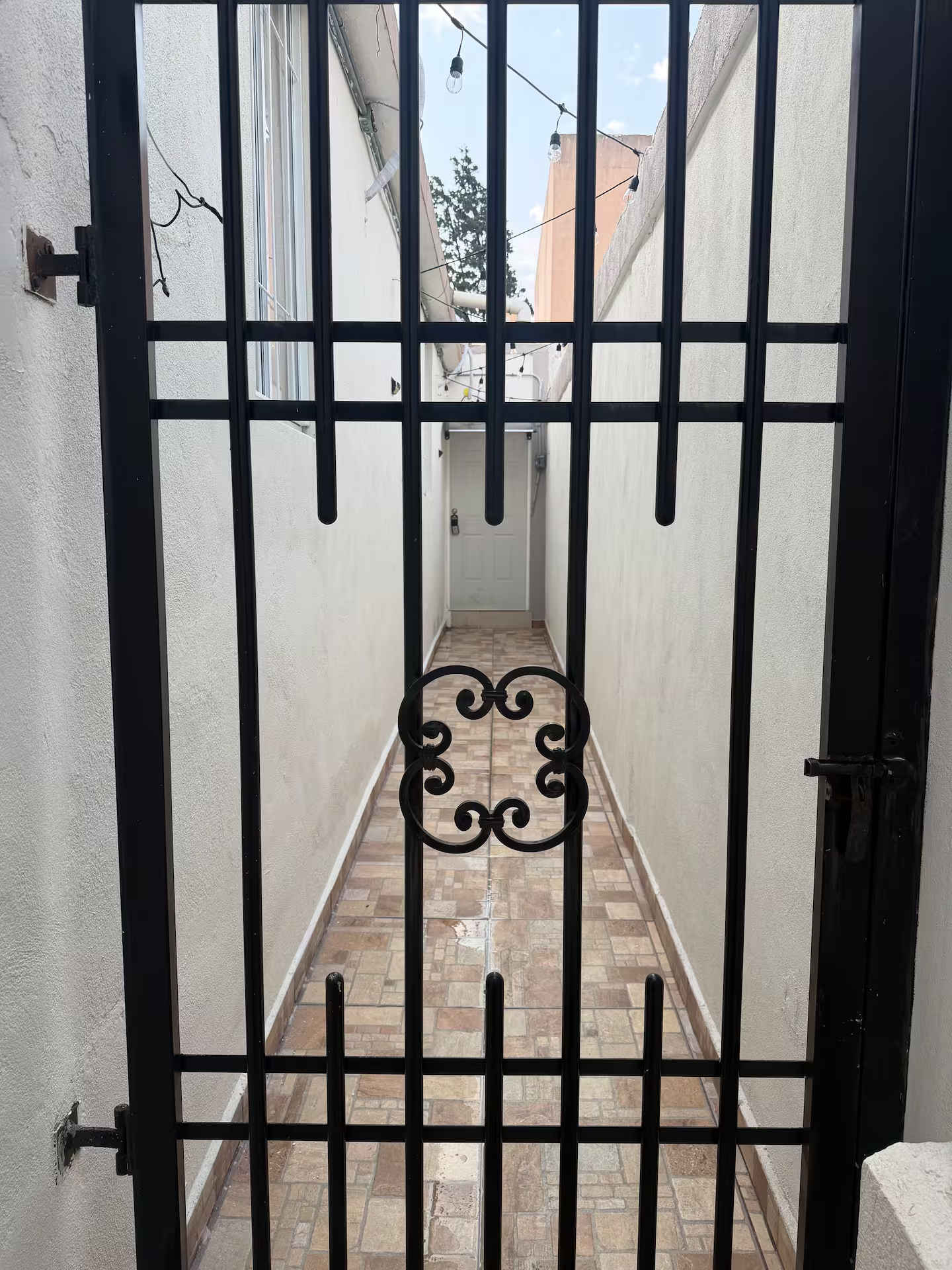
Two features matter more than they appear to: private parking, so you're not leaving a car on the street or walking back to it at night, and a private entrance with self check-in, which removes any dependence on someone else's schedule to get in.
Our independent studio for two is in Guadalupe, on a property with gated private access, free parking, a private entrance and self check-in. If you're weighing up the area for your dates, message us on WhatsApp and we'll talk it through.
Frequently asked questions
Monterrey hosts business, sports and medical visitors year-round, and the vast majority of stays pass without incident. Big-city precautions apply, and you should check your own government's official travel advisory before you go.
Ride-hailing apps are the recommended option: the trip is logged, the fare is agreed up front, and there is no street negotiation.
In busy central areas such as the Macroplaza and the Paseo Santa Lucía, walking at night is normal. Outside those areas, and in the small hours, it is better to move by car or app.